Collaboration infrastructure for investigators
Designing collaboration where there was none: from an unstructured comment thread to the first communication layer between investigators, banks, and law enforcement.
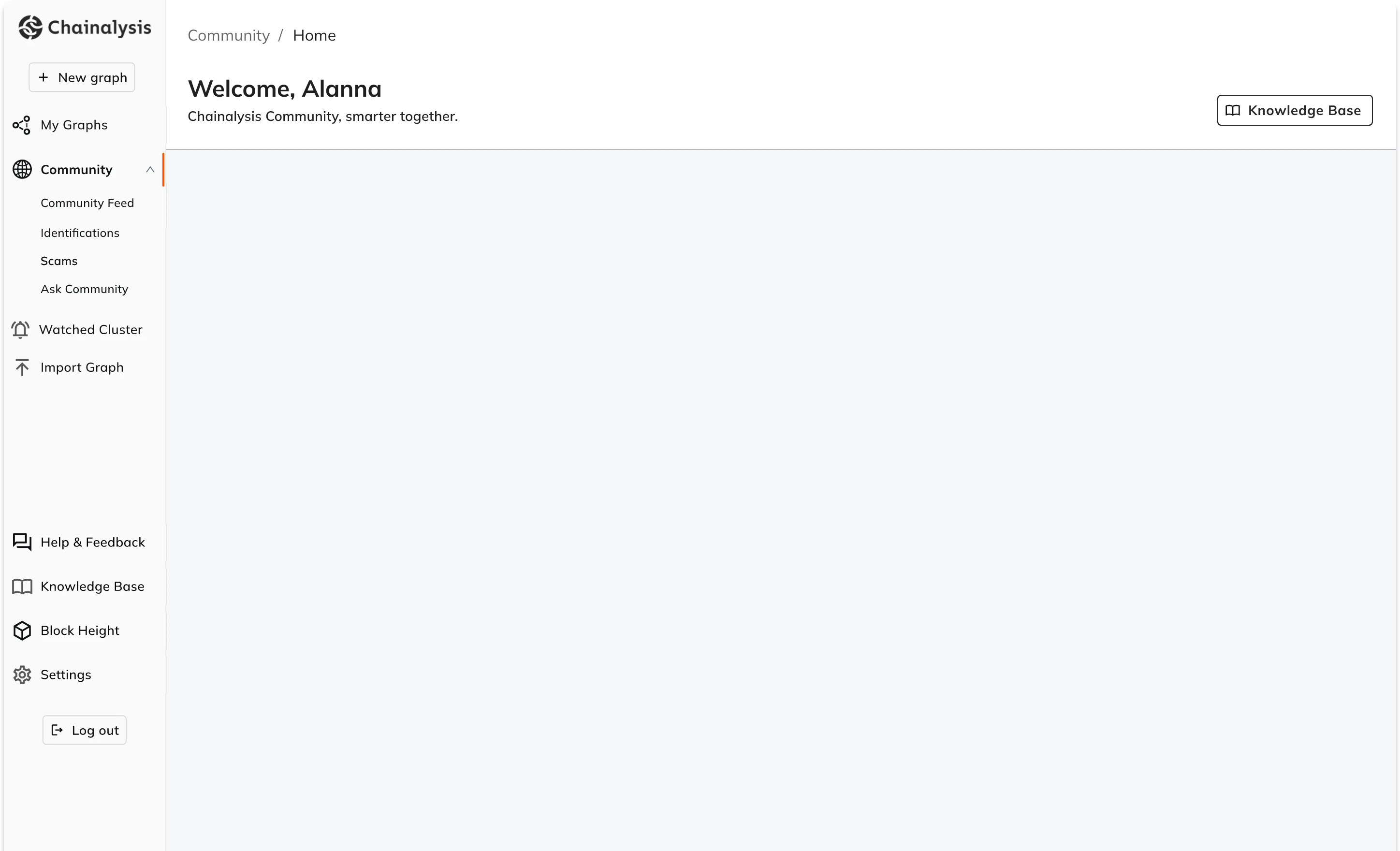
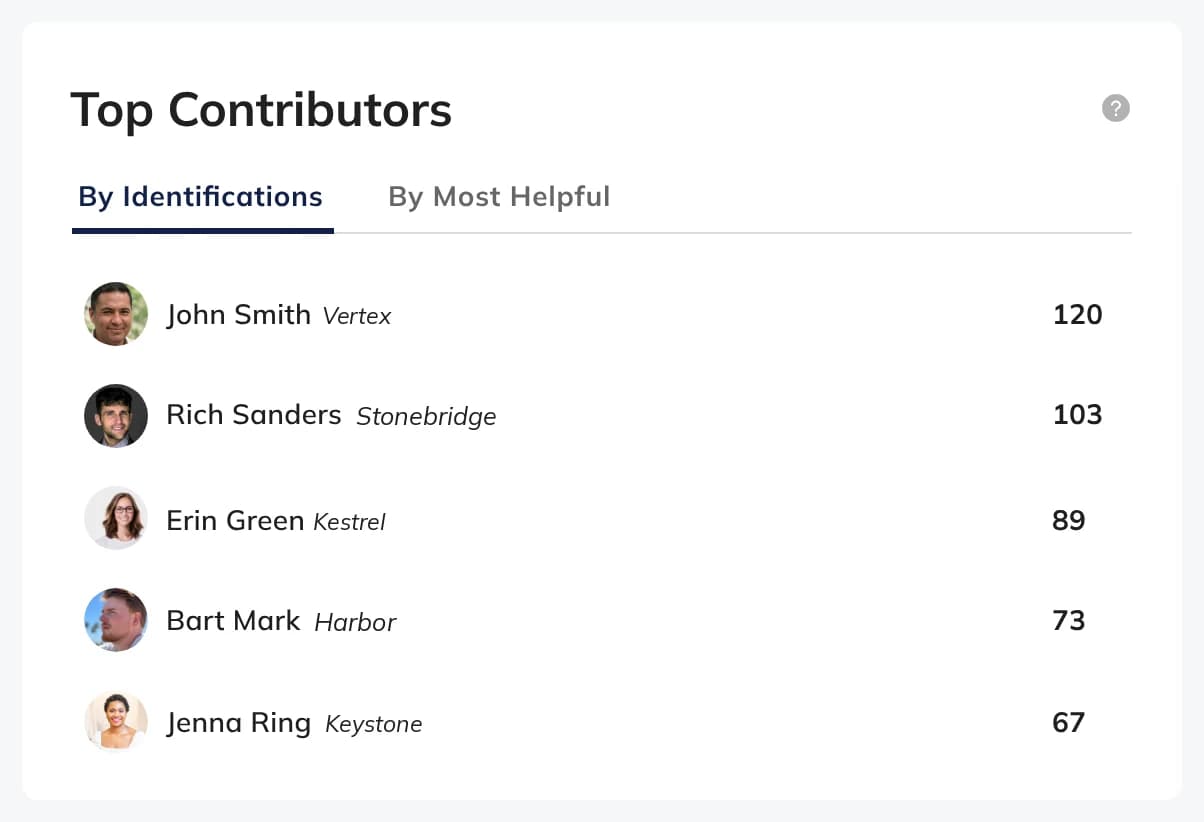
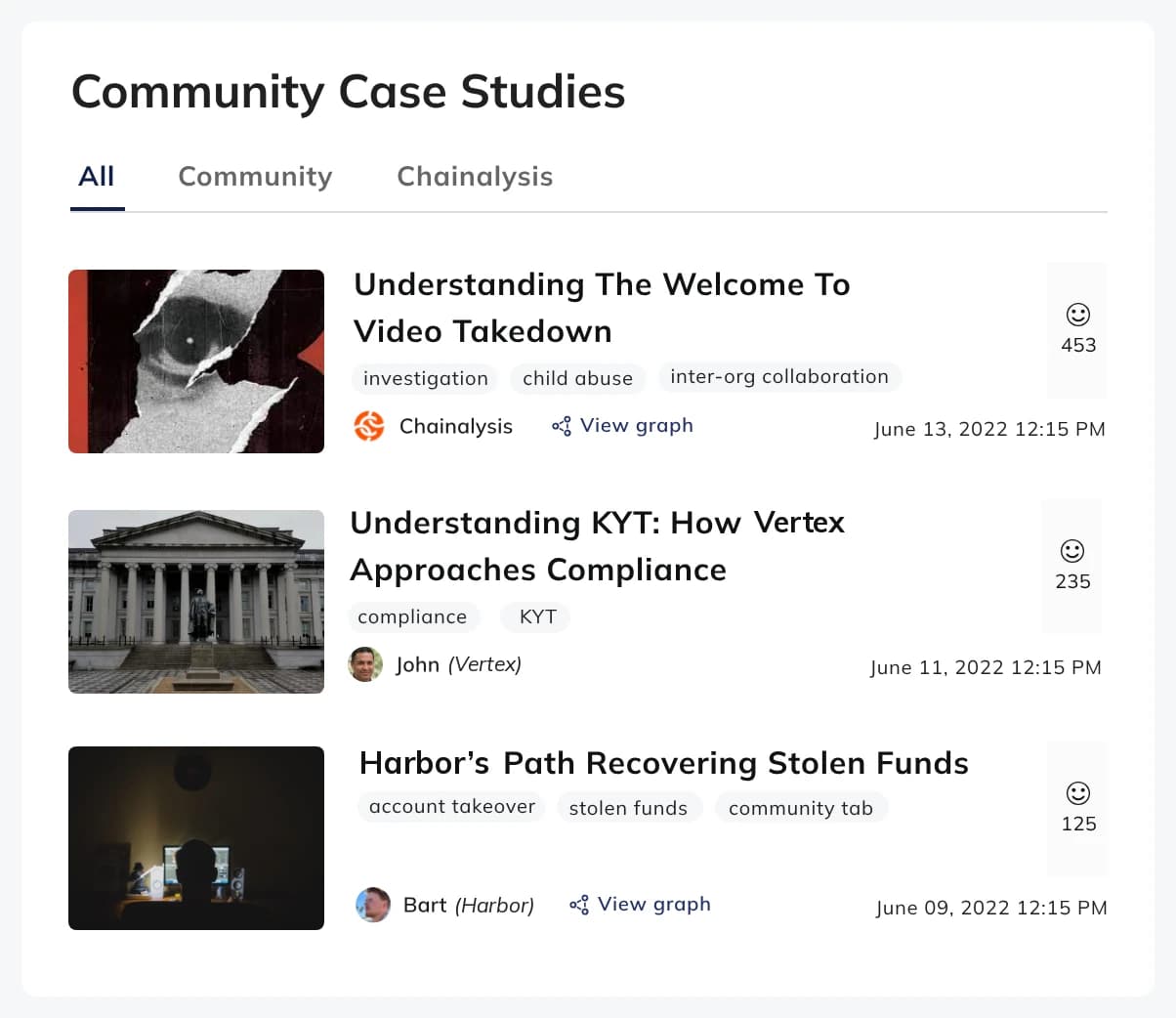
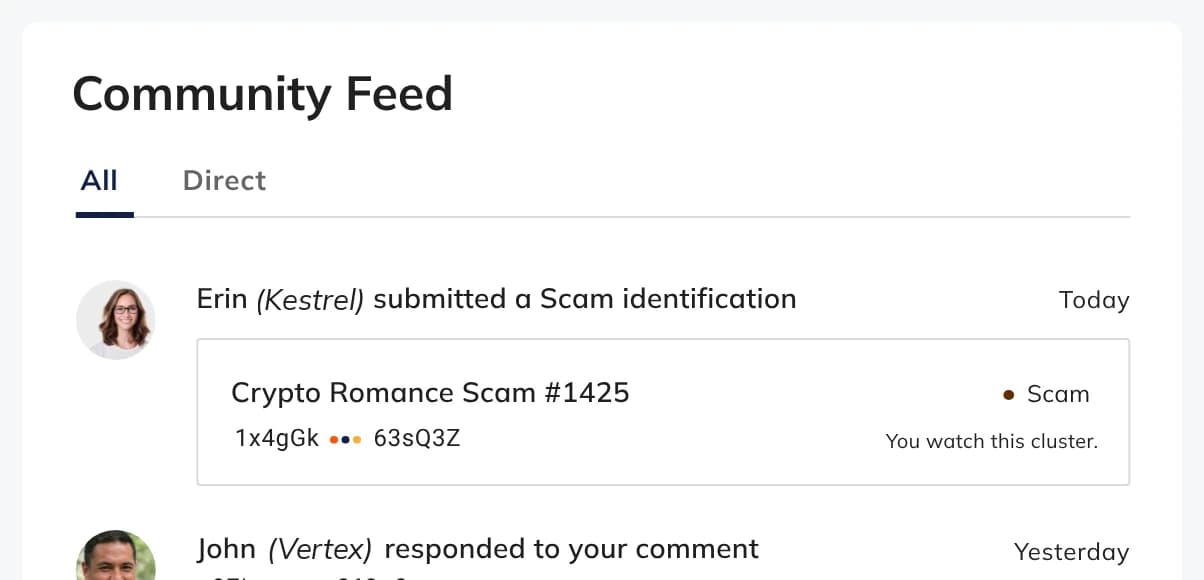
 Community Hub
- 92% private-sector adoption of the Directory
- 5× crowdsourced data submissions
- 33 → 49% collaboration rate
What I owned
- LedCommunity Identifications
- LedCommunity Hub
- LedDirectory & legal requests
- LedUX research, before a researcher existed
Scope
- 4
- products
- 4+
- teams, including legal
- 300 → 1,000
- company growth while I was there
What lasted
Set up the pipeline from customer success to design, ran research before there was a researcher, and introduced the suite's first cross-product pattern.
The structural problem
How do you build communication infrastructure for people who've never been in the same room?
Chainalysis makes the tools law enforcement and financial institutions use to trace funds in crypto. Money crosses jurisdictions constantly, so the FBI, a bank in Seoul, and a compliance team in Spain might chase the same lead with no way to find each other.
The bet: with these players on one platform, Chainalysis could build collaboration no competitor could copy. When I joined, that was an unstructured comment feature with a 0.5% contribution rate.
The work
Three layers of a collaboration network.
Turning comments into intelligence the data team could use
Community Identifications
33% of users opened the community tab. 0.5% ever posted.
Investigators already shared identifications through the community tab, a flag, and email, with no structure and no path into the data team's workflow. The real problem was connecting human signal to a data system both sides could trust.
- Structure over conversation. A structured identification form replaced free-text posts, its fields drawn from past submissions and what the data team needed to verify them.
- Design for calibrated trust. Research mapped how confident investigators were when they submitted and what certainty they'd act on. Each submission carries a reliability category the data team can triage by, and a label marks it as structured but unverified.
- Follow the case you missed. Beta users needed to flag addresses nested inside larger services, so three proposed identification types collapsed into one.
- Data submissions
- 5×
Outcome The first crowdsourced identification workflow in blockchain intelligence, and the start of a serious internal conversation about crowdsourced data as a competitive moat.
Surfacing what the community already knew
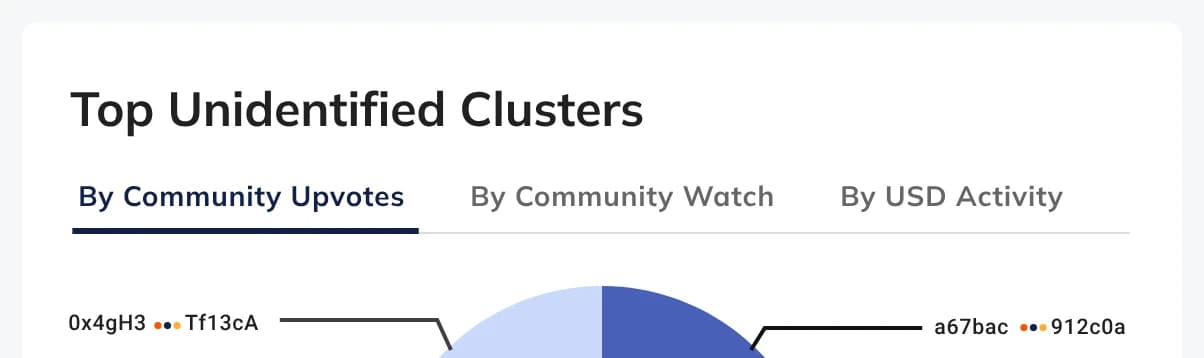
Community Hub
Valuable intelligence was buried at the cluster level. You had to already know where to look.
Investigators couldn't tap what the wider community knew about a case, and once they found a lead, it was hard to know who to contact or how.
- Research broad, then narrow. Mapping how each persona worked and collaborated produced four recommendations, including decoupling contact info from suspicious-activity reports and launching a hub.
- Ship two workflows, not three. Legal judged flagging addresses as suspicious too risky to ship first, so we shipped an identification flow aimed at scams, where most activity was, and Ask Community, a structured call for help on a case.
- Let users do the persuading. The engineering manager doubted the hub's value in the abstract. Instead of arguing in meetings, I invited her to user testing, and watching investigators react did the persuading.
- Collaboration rate
- 33% → 49%
- Light-touch interactions
- 30×
- Posts
- 3×
Outcome Launched to all commercial customers in August 2022, six months after research began.
Helping investigators find the right contact, mid-case
Directory & legal requests
The FBI and a Spanish bank were tracking the same lead. They had no way to find each other.
Mid-investigation, investigators needed to know who to contact at an exchange and how to send a legal request. The work spanned four products and four-plus teams, legal included.
- Simplify to ship. I pulled legal in early, so their access-control concerns reshaped scope instead of stalling it: a beta with 13 trusted customers and data we seeded ourselves, which grew to 200 users.
- Everywhere, in context. One modeless dialog across all four products, beside the cluster on the graph: the suite's first cross-product pattern.
- Research over the flashy answer. There was pressure to build an “auto-subpoena.” Concept tests showed subpoena processes vary by country, so I recommended holding the legal workflow for case management instead of shipping the wrong thing.
- Private-sector adoption
- 92%
Outcome 92% of private-sector users adopted the Directory, and organizations began maintaining their own compliance contacts: the first structured channel between investigators and law enforcement.
Also shipped
- Graph organization & sharing. Changed leadership's mind about the product direction with research.
- vizTX. Advocated for users against business pressure on a consumer visualization tool, with a segmentation map and a business-model argument.
- IRS audit trail MVP. With an IRS contract on the line, found the most stripped-back version that worked.